Etiquette8 min read
Are Digital Wedding Invitations Tacky? What Guests Notice
Digital wedding invitations aren't tacky; careless ones are. What guests notice, when paper still wins, and nine ways to make yours feel like stationery.
By The Veiloria AtelierPublished Updated
Contents
- Are digital wedding invitations tacky? The short answer
- Why people think digital wedding invitations are tacky
- What makes a digital invitation feel careless
- What makes a digital wedding invitation feel formal
- When paper invitations are still the better choice
- The hybrid answer: digital for everyone, paper for a few
- 9 ways to make a digital invitation feel formal
- What to say to a parent who thinks it's tacky
- Sources
- Frequently asked questions
No, digital wedding invitations aren't tacky; careless invitations are, whether they arrive by text or by post. Guests notice a forwarded screenshot, a bare link or a page full of ads; a designed invitation with formal wording, every detail in one place and a reply built in reads as stationery.
Below: where the reputation came from, when paper still wins, a 9-point checklist and a message for a doubtful parent.
Are digital wedding invitations tacky? The short answer
A digital invitation is judged on what a paper one is judged on: the wording, the design and the care in sending it.
A digital wedding invitation is an invitation your guests open on their phone or computer from one private link. A good one opens with a moment of its own, holds every detail of the day and collects each guest's reply. It is not a JPEG, a PDF or a group-chat announcement (our guide to digital wedding invitations explains the rest).
Most guests are already there: 91% of US adults own a smartphone, including 79% of those 65 and older (Pew Research Center, 2026).
Why people think digital wedding invitations are tacky
The reputation comes from early e-invitations that looked like a quick fix. The objection is fair about those, not the format.
Forwarded images and group chats
An image dropped into the family group chat gets forwarded, compressed and cropped. Replies arrive as thumbs-up emoji across four chats, and nobody knows who is coming.
Ads, logos and sign-up walls
Free invitation services pay for themselves somehow: banner ads, the service's own branding across your invitation, an account to create before replying. Each tells guests it cost no thought.
What makes a digital invitation feel careless
A digital invitation feels careless when it makes guests do the work.
A bare link with no message
A URL on its own looks like spam. Send it inside a short, personal message; our guide to WhatsApp wedding invitation messages has 40 to copy.
A screenshot instead of an invitation
An image can't hold a map, a reply form or a correction. If the ceremony moves by thirty minutes, every copy already sent is wrong.
Details scattered across five messages
Time in one text, address in another, dress code "to follow". Nobody should scroll a chat to find where to be.
| What guests notice | Reads as careless | Reads as considered |
|---|---|---|
| How it arrives | A bare link, or a forward in a group chat | A personal message, one guest at a time |
| What opens | A compressed image or a PDF | A designed opening: an envelope, a seal, a veil |
| The wording | "Hey, we're getting married!!" | The phrasing you would print |
| The details | Spread over several messages | Time, venue, map, dress code and reply in one place |
| Around it | Ads, loud branding, a sign-up form | Nothing that asks guests for anything |
What makes a digital wedding invitation feel formal
Formality comes from four choices: invitation wording, an opening, completeness and each guest's name.
Wording that reads like an invitation, not a text
Write it as you would have it engraved. Here are our demo couple Margaux and Henri's details, set as one card:
Together with their families, Margaux and Henri request the pleasure of your company at the celebration of their marriage on Saturday, the eighteenth of September, two thousand twenty-seven, at five o'clock in the afternoon, Château de Montclair, Loire Valley.
Our wedding invitation wording guide has 60 examples.
A real opening moment
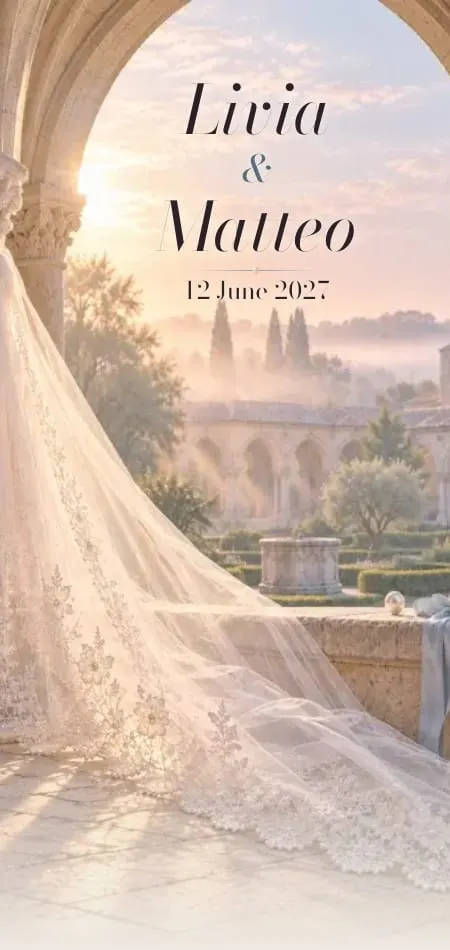
Paper has a ritual: the envelope, the card, the tissue lifted away. A digital invitation needs its own. At Veiloria, each of the 43 designs begins with a signature opening the guest starts with a gesture; in the Cathédrale digital wedding invitation, guests lift a veil of silk tulle to find your names in a cloister at dawn.
Every detail in one place
Ceremony, reception, a map, dress code, travel, a calendar button and the reply, in sections guests can return to. A changed time updates for everyone on the same link.
A personal link that greets each guest by name
A group message says "all of you"; a personal link says "you". With Veiloria's guest list manager, each guest's link greets them by name and knows how many extra seats you've kept for them, from none to three.
When paper invitations are still the better choice
Paper still wins for guests without smartphones, for some religious customs, and as a keepsake. None of these needs a full printed suite.
Guests who don't use smartphones
Among Americans 65 and older, 14% have a cellphone that isn't a smartphone (Pew Research Center, 2026). Post those guests a card, and give someone close to them the link. Our guide to digital invitations for older guests covers calls, type size and replying on their behalf.
Very formal or religious ceremonies
Online wedding invitations suit black-tie and religious weddings when the wording and design are formal. Some customs still ask for a card: many Hindu families offer the first invitation to Ganesha before any other is given, and some hand a printed card to the officiant or to elders in person. Keep those on paper.
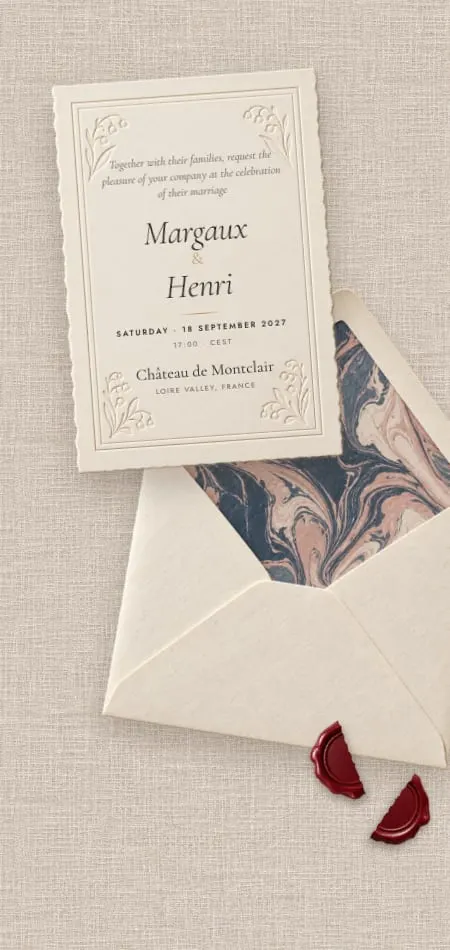
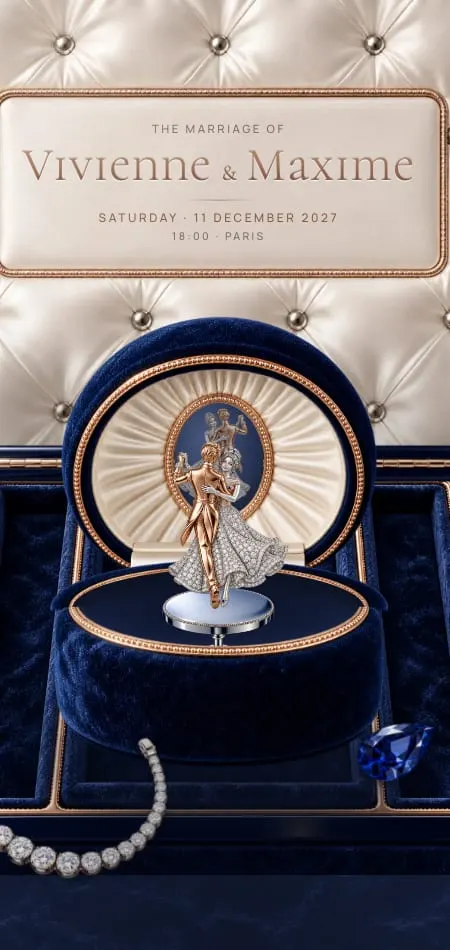
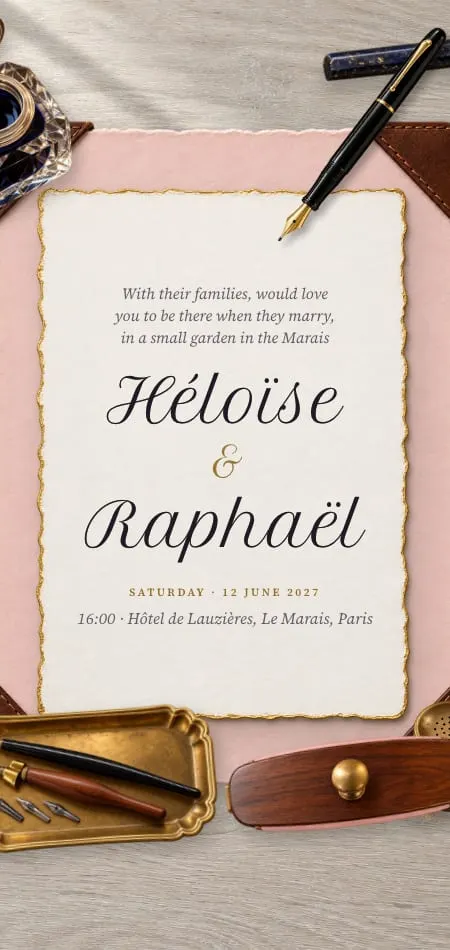
A sealed envelope or a ring box sets a black-tie tone. For something handwritten, Calligraphe writes your names live in iron-gall ink, and each guest signs their reply in the ink they choose.
A keepsake to frame
Grandparents often want something for the mantel. Print a few covers, not a suite for everyone.
The hybrid answer: digital for everyone, paper for a few
Send the digital invitation to every guest, and post a printed card with a QR code to the few who need paper. Everyone reaches the same invitation, and every reply lands in one list.
| Guest | What they receive | How they reply |
|---|---|---|
| Most guests | The link, in a personal message | On the invitation |
| A grandparent without a smartphone | A printed card by post, and a phone call | A relative replies on their link, or you do after the call |
| An officiant or a religious custom | A printed card, by hand | In person |
Veiloria's invitations come with a QR code ready to print, so a card opens the same invitation. Posting a few cards costs little: a 1-ounce stamped letter is $0.82 in the US, plus $0.49 for nonmachinable envelopes such as square ones (USPS Notice 123, effective 4 October 2026). See wedding invitation QR codes for print sizes.
9 ways to make a digital invitation feel formal
Check these before you send:
- Use invitation wording. Full names, a hosting line, the date spelled out.
- Wrap the link in a personal message. Two lines in your own voice.
- Send to one guest or household at a time. Never a group chat.
- Give it an opening. A gesture before the details appear.
- Keep every detail inside the invitation. Including the reply.
- No ads or sign-up walls. Guests open it and reply without an account.
- Greet each guest by name. A personal link, or at least their name in your message.
- Follow the stationery calendar. Send 8–12 weeks before, with a reply-by date about four weeks before the day.
- Print for the few who need paper. A card with a QR code.
Our digital wedding invitation etiquette guide covers reminders and plus-ones.
What to say to a parent who thinks it's tacky
Find the real worry and answer it, not the format.
| The worry | The answer |
|---|---|
| "It looks cheap." | Show them the design, not a description. |
| "Grandma won't see it." | She gets a printed card; a relative has her link. |
| "People won't reply." | The reply is built in, with a reply-by date. |
| "It isn't proper." | The wording is what you'd print. |
| "There's nothing to keep." | You're printing keepsakes for family. |
Then let them choose who on their side receives paper. If cost is the real question, digital vs paper wedding invitations compares both.
A message you can adapt
Hi Mom, I know you pictured printed invitations, so I want you to see this before anyone else. Every guest gets the same invitation, designed for us, with the times, a map and the reply in one place, and any change updates for everyone. We're printing cards for Grandma, Aunt Ruth and anyone else you name. Here's yours, first.
Sending a parent the proof before anyone else does more than any argument, and nothing is shared until you approve it.
Sources
- Pew Research Center, Mobile Fact Sheet, 2026 survey of US adults. Checked 19 October 2026.
- United States Postal Service, Price List, Notice 123, effective 4 October 2026. Checked 19 October 2026.
Frequently asked questions
Are digital wedding invitations tacky?
No: a digital wedding invitation is only tacky when it's careless. A forwarded image or a page with ads reads as an afterthought; formal wording, a designed opening and a built-in reply read as stationery.
Is it OK to send electronic wedding invitations?
Yes, for almost any wedding, as long as each guest receives it personally. Post a card to anyone without a smartphone, and keep paper wherever a custom asks for it.
Are online wedding invitations acceptable for a formal wedding?
Yes, when the invitation itself is formal: traditional wording, the date spelled out and a design with a black-tie tone. Keep paper for any religious custom that asks for it.
Is it tacky to send an evite for a wedding?
It can be: a generic party e-card, especially one with ads or a sign-up form, reads as too casual for a wedding. An invitation designed for your wedding, which guests open and reply to without an account, doesn't.
Should I send paper invitations to older relatives?
Send paper to relatives who don't use a smartphone or would treasure a card, not to everyone over a certain age. Ask your parents who on their side expects paper, and post those few a card with a QR code.
Is it rude to invite people to a wedding by WhatsApp?
No, as long as the message is personal and the invitation is complete. Write to each guest or household directly, never to a group, and send the invitation as a link rather than a screenshot.